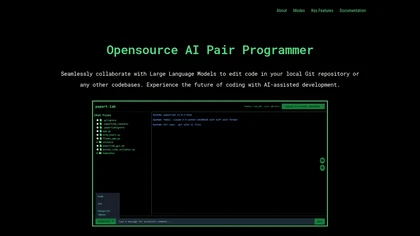
PapertLab from papert.in Reviews
(Rated by 5 users)
Are you looking for ways to save money when shopping at PapertLab from papert.in. Our PapertLab from papert.in coupon codes can help you do just that! Over 5 customers have already used our coupons to save an average of $74 with PapertLab from papert.in discount codes. There are currently 6 coupons available, so now is the perfect time to join in on the savings.
Are you looking for ways to save money when shopping at PapertLab from papert.in. Our PapertLab from papert.in coupon codes can help you do just that! Over 5 customers have already used our coupons to save an average of $74 with PapertLab from papert.in discount codes. There are currently 6 coupons available, so now is the perfect time to join in on the savings.
Payment Methods
- Verified Store VERIFIED
- Free shipping: Orders $50+
- In-store pickup: Ready in 2 hours
- 30-Day Returns
- Gap Good Rewards (4 brands)
Payment Methods
- Tops: $23 - $70
- Bottoms: $27 - $70
- Outerwear: $34 - $70
- Kids: $29 - $75
Overall Rating
4.2
Base on 5 Reviews
Ratings by Feature
Ratings by Feature
- Price & Quality4.5
- Customer Service4.3
Recent Customer Reviews (5)
Marshall Nguyen
View replies
Hollie Wallace
View replies
Courtney Thomas
View replies
Lily Middleton
View replies
Flordelis Lacroix
View replies
PapertLab from papert.in Pricing
Papertrell
starting at $49/month
PaperVision
starts at $35/month/user
Paperbell
$57/month or $570/year
PapertLab from papert.in Pros & Cons
Pros
1
Biodegradable: Paper is environmentally friendly as it can break down naturally without leaving harmful residues.
2
Engagement and Retention: Paper-based learning can improve student engagement, retention, and comprehension.
3
Focus and Distraction Reduction: Using paper can help reduce distractions and improve focus compared to digital tools.
4
Tactile Experience: Paper provides a tactile experience that many find more satisfying and effective for tasks like editing and annotating.
5
Enhanced Creativity & Self-expression: By enabling learners to program visually using turtle graphics or similar tools, it fosters creativity in expressing mathematical or computational ideas visually.
6
Improved Mathematical Understanding: Making abstract math tangible through visual programming helps deepen comprehension of geometry, algebra, and other areas by linking them to concrete representations.
7
Empowerment Through Creation: Learners become creators who shape their digital worlds rather than mere consumers of technology; this builds confidence and engagement in STEM fields.
8
Higher Quality Learning Outcomes: The microworld environment promotes deeper conceptual understanding compared to traditional rote learning methods by contextualizing coding within purposeful educational designs.
9
Teacher Empowerment & Reinvention of Instructional Methods: Supports teachers in adopting new roles as facilitators who learn alongside students while integrating technology meaningfully into curricula focused on exploration rather than memorization.
CONS
1
Portability and Backups: Paper is less portable and lacks automatic backups, making it vulnerable to loss.
2
Cost and Accessibility: While paper can be cost-effective in some contexts, it may not be as accessible or efficient for large-scale or complex tasks.
3
Space and Storage: Paper requires physical space for storage, which can be a limitation in digital age environments.
PapertLab from papert.in Features and Benefits
Features
Microworlds Concept
Simplified, interactive environments designed to help learners explore complex concepts in a manageable way, providing learners with agency and control, allowing experimentation at their own pace
Turtle Graphics / Logo Programming
Visual programming approach where users command a virtual turtle to create shapes and patterns, helping develop spatial reasoning, problem-solving skills, and understanding of mathematical concepts like geometry
Constructionist Learning Approach
Emphasizes learning through creation and active participation rather than passive consumption, enabling learners to build knowledge by experimenting, hypothesizing, iterating, and creating digital artifacts
Project-Based Learning Integration
Supports collaborative projects around meaningful ideas that connect students’ interests with powerful educational content, engaging students deeply through project-oriented work
Accessible Programming Environment
Simple enough for children or beginners without extensive computer science background while introducing advanced concepts such as recursion
Enhanced Creativity & Self-expression
Enables learners to program visually using turtle graphics or similar tools, fostering creativity in expressing mathematical or computational ideas visually
Improved Mathematical Understanding
Makes abstract math tangible through visual programming, deepening comprehension of geometry, algebra, and other areas by linking them to concrete representations
Empowerment Through Creation
Turns learners into creators who shape their digital worlds rather than mere consumers, building confidence and engagement in STEM fields
Higher Quality Learning Outcomes
Promotes deeper conceptual understanding compared to traditional rote learning by contextualizing coding within purposeful educational designs
Teacher Empowerment & Reinvention of Instructional Methods
Supports teachers in adopting new roles as facilitators who learn alongside students, integrating technology meaningfully into curricula focused on exploration rather than memorization